 Alex Martin
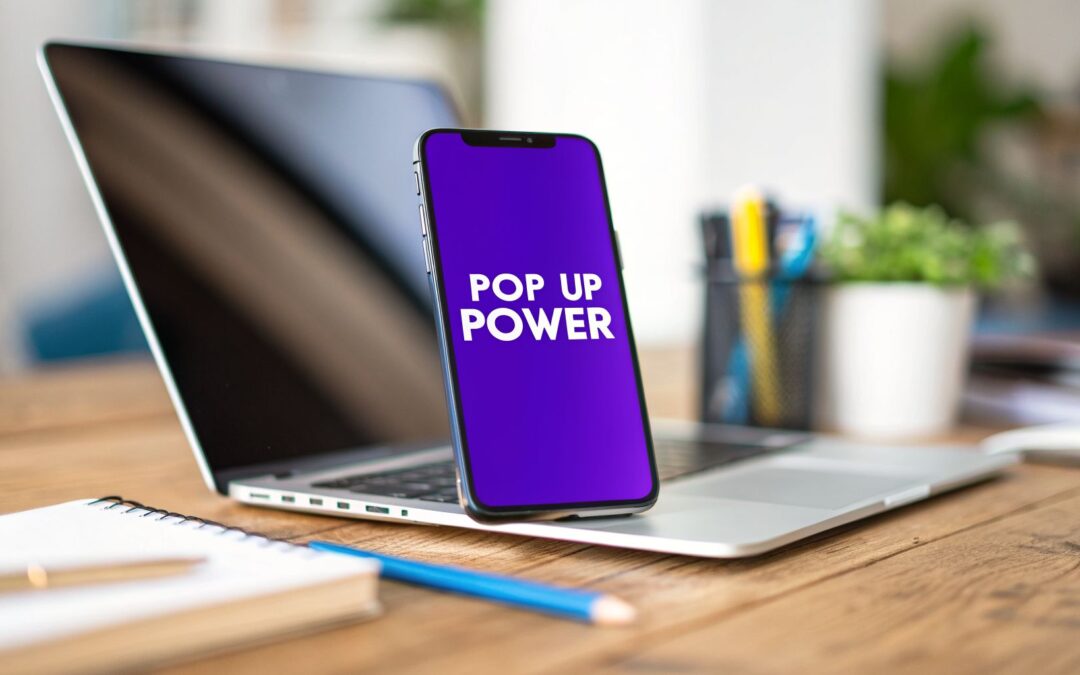
Let's be honest, the word "popup" can make some people cringe. We've all been attacked by those annoying, irrelevant boxes that just get in the way. But a strategic pop up for website design isn't an annoyance; it's a powerful conversion tool. When done right, it can turn passive visitors into active leads and customers at a rate that standard on-page elements just can't touch.
Why a Smart Pop Up for Website is a Game Changer
The conversation has moved way past the old myth that all popups are bad. The real question isn't if you should use them, but how you can use them to improve the user experience and drive real, measurable growth. The difference between a popup that converts and one that gets instantly closed comes down to three things: timing, relevance, and value.

The Numbers Don't Lie
Forget guesswork. Modern popups are data-driven machines. The performance gap between a well-executed popup and a standard call-to-action button is pretty staggering. Let's put some numbers to it.
Here’s a quick look at how popups stack up against typical on-page conversion rates, based on current industry benchmarks.
Popup Conversion Rates vs Standard Page Rates in 2026
| Metric | Average Conversion Rate | Performance Notes |
|---|---|---|
| Email Opt-in Popup | 4-5% | This is for a standard, well-timed popup. Top performers can easily double this. |
| Exit-Intent Popup | 10-15% | Excellent for recovering abandoning visitors with a last-minute offer or resource. |
| Standard On-Page CTA | 1-2.5% | A typical conversion rate for a CTA button or form embedded within a page. |
As you can see, even an average popup can bring in 2x to 4x more conversions than a static element. For every 100 visitors, that's a handful of new leads you would have otherwise missed. It’s a massive opportunity, and for Divi users, it's easier than ever to tap into this power.
You can take a broader look at the data by checking out these popup marketing statistics.
Your Go-To Tools for Divi Popups
This is where our specialized plugins, built from the ground up for Divi, come into the picture. We'll be using two main tools throughout this guide:
- Popups for Divi: Our free plugin is the perfect starting point. It's great for creating your first email opt-ins, announcements, or simple contact forms right inside the Divi Builder.
- Divi Areas Pro: This is the premium powerhouse. It unlocks advanced triggers like exit-intent, detailed user targeting (by device, role, or page), and deep WooCommerce integration. This is what you need to turn your site into a true conversion-focused platform.
We're going to show you how these tools give you the ability to build any kind of popup you can imagine—from a simple newsletter form to a complex, dynamic offer that only appears for specific users at the perfect time.
My goal here is to give you the exact strategies and tools to create a pop up for your website that does more than just exist; it actively helps your business grow. We'll walk through every step, so you can confidently build these high-converting popups on your own Divi site.
Choosing the Right Divi Popup Plugin for Your Goals
Picking the right tool is the first, and most important, part of building a successful popup. When you're working with Divi, you have a couple of fantastic options, but the best one for you really boils down to what you're trying to accomplish. Instead of just rattling off a list of features, let's look at some real-world situations to help you decide between our free Popups for Divi plugin and the powerhouse that is Divi Areas Pro.
I like to think of it like choosing a vehicle. Sometimes all you need is a reliable car to get from A to B. Other times, you need a heavy-duty truck built for specialized, demanding jobs. Both are great, but they're built for entirely different purposes.
When to Start with Popups for Divi (Free)
The free Popups for Divi plugin is the perfect starting point for most people. It's incredibly lightweight, simple to get the hang of, and works right inside the Divi Builder you already know and love. It’s the go-to choice when your needs are straightforward.
The free plugin is your best bet in these common scenarios:
- Simple Lead Capture: You're a blogger or consultant just looking to grow your email list. All you need is a clean, simple popup with a newsletter form that appears after a visitor has been on the page for a few seconds.
- Basic Announcements: You just want to let visitors know about an upcoming maintenance window, a brand-new blog post, or some other general update.
- Easy Contact Form Access: You need a quick way for users to pop open a contact form from any page, without making them navigate away and lose their place.
Our free plugin handles these tasks perfectly. You can build any layout you want in the Divi Library and trigger it with a simple click. It’s all about getting the essentials done right, without any fuss.
For a lot of new projects, starting with the free plugin is the smartest move. It lets you test out your popup ideas and start gathering leads right away. It's a solid foundation you can always build upon later.
When to Upgrade to Divi Areas Pro
As your website and marketing strategy grow, your needs will become more sophisticated. You'll want more power, more precision, and more control. This is exactly where Divi Areas Pro steps in and becomes an indispensable tool. It's the specialized, high-performance solution designed for targeted, behavior-driven marketing that has a direct impact on your bottom line.
You’ll know it’s time for Divi Areas Pro when you need to:
- Recover Abandoned Carts: This is a non-negotiable for any WooCommerce store. You can set an exit-intent trigger to show a unique discount code only to shoppers who are about to leave your cart or checkout page. This one feature alone can bring back a surprising amount of otherwise lost revenue.
- Create User-Specific Offers: Imagine you're running a membership site. With Divi Areas Pro, you could display a special popup offer that is only visible to logged-in users who have a specific role, like "Gold Member."
- Engage Your Most Interested Readers: You could trigger a popup with a free ebook or checklist, but only after a user has scrolled 70% of the way down a long blog post. This ensures you're targeting your most engaged readers who are primed to convert.
- Run Geo-Targeted Promotions: Got a special sale that's only for customers in a certain country? You can easily configure your popup to appear only for visitors from that specific location.
Divi Areas Pro takes your popups from being simple, static announcements and turns them into smart, dynamic marketing tools that react to what your users are doing in real time. For a deeper look at the options out there, check out our complete guide on the best plugins for Divi popups. It’s the right choice when you're ready to move past the basics and start strategically optimizing for serious conversion growth.
Designing Your First Popup with the Divi Builder
Alright, you've got the right plugin installed. Now for the fun part—actually building the popup. This is where Divi really comes into its own. Instead of being stuck with clunky, rigid templates, you get to design your pop up for website with the very same Divi Builder you use for all your pages.
That means every module, design trick, and bit of custom CSS you’ve picked up is ready to go. If you can build it in Divi, you can make it a popup. Let's fire up the builder and create a simple, high-converting email opt-in form.
Creating Your Popup Foundation with a Divi Area
If you're using Divi Areas Pro, your popup journey begins with creating a "Divi Area." Just think of it as a reusable Divi layout in your library, but one that’s built specifically to be a popup, fly-in, or some other dynamic element.
To get started, head over to Divi > Divi Areas in your WordPress dashboard and click "Add New." Give it a clear name you'll remember, like "Newsletter Signup Popup." After that, you'll see that familiar button: "Edit with Divi Builder."
Click it, and you’re dropped into a blank canvas. This is your design space. You can add sections, rows, and any module you want. For this example, we’ll stick to a clean, single-column layout.
Pro Tip: Keep your first popups clean and focused. The whole point is to present one clear call to action. A cluttered design just confuses people and tanks your conversion rates. A headline, a short sentence, and a form is almost always enough.
Adding Content and Styling for Maximum Impact
With your section and row ready, it's time to add the essentials for our email opt-in. We'll pull in three core Divi modules: a Text module for the headline, another for the body copy, and of course, the Email Optin module.
Here’s how I’d approach styling these for a popup that actually converts:
- Headline (Text Module): Make it count. Instead of a boring "Subscribe to Our Newsletter," try something that offers real value, like "Get Our Top 10 Marketing Tips Delivered Weekly." Use a bold, large font that grabs attention right away.
- Body Copy (Text Module): Keep it short and sweet. One or two sentences is all you need to add a little context. For example: "Join 5,000+ other business owners growing their brand with our exclusive insights."
- Form Fields (Email Optin Module): Don't create friction. Asking for just an email address is usually best. Every extra field you add is another reason for someone to close the popup.
- Button (Email Optin Module): This is your money-maker. Use a high-contrast color that practically jumps off the background. Action-focused text like "Send Me the Tips!" or "Count Me In!" almost always beats a generic "Submit."
The best part is you can use all your favorite Divi design settings. Add a subtle box shadow to make the popup "lift" off the page, dial in your custom fonts to match your branding, or pop in a small, relevant image. Your grasp of color psychology can also make a huge difference here. You can even check out our guide on how to apply color psychology in popups to make your designs that much stronger.
Designing the All-Important Close Button
Last but not least, every popup needs an obvious escape hatch. Both Popups for Divi and Divi Areas Pro automatically add a close button for you, and you can style it to your heart's content. Change its size, color, and position to make sure it's easy to spot and never feels hidden.
A user-friendly close button is more than just good manners; it’s crucial for a good user experience. Hiding the "X" is a classic "dark pattern" that only creates frustration and can hurt your brand. Make it easy for users to say "no thanks," and they'll be far more receptive the next time. Once you’re happy with the design, just save the layout. Next up, we'll configure the triggers that tell your beautiful new popup when and where to appear.
Mastering Popup Triggers and Targeting Rules
A great-looking pop up for website is a good start, but it's only half the job. The real conversion power comes from showing it to the right person at the perfect time. This is where Divi Areas Pro really pulls ahead, giving you a whole world of intelligent, behavior-driven display logic that goes way beyond simple click triggers.
Think about it: timing and relevance are everything. A popup that feels helpful instead of annoying is one that understands what the user is doing. Are you offering a discount to someone about to abandon their cart? Or maybe a helpful guide to a reader who is clearly deep into your content? By mastering the triggers and targeting rules in Divi Areas Pro, you can answer these questions and build a strategy that works.
This decision tree is a great starting point for figuring out what your popup should even contain, based on its main goal.

As you can see, the flowchart makes that initial choice pretty simple. If you're after leads, an opt-in form is a must. If you're trying to drive sales, a strong call-to-action button is your priority.
Activating Popups with Smart Triggers
Triggers are the "when" of your popup strategy—they're the specific action that makes your Divi Area appear. Divi Areas Pro gives you a powerful set of options that are much smarter than just showing a popup on page load.
Here are the triggers I use most often and how to apply them strategically:
- On Exit Intent: This one is an absolute game-changer for winning back visitors who are about to leave. Divi Areas Pro cleverly detects when a user’s cursor moves up toward the browser's address bar, a clear sign they're heading for the exit. This is your last chance to flash a compelling offer, like a 15% discount code or a quick prompt to save their cart. I've seen this trigger alone recover a huge chunk of would-be lost sales.
- On Scroll: This trigger is perfect for engaging your most dedicated readers. Instead of hitting them with a popup right away, you can set it to appear only after they've scrolled, say, 70% down the page. Someone who has read that far is clearly invested in your content, making them the ideal person to offer your free ebook or checklist to.
- After Time Delay: Sometimes, people just need a moment to get their bearings. A time-delay trigger lets you wait a few seconds before showing the popup. I've found a delay of 10-15 seconds is a sweet spot. It gives visitors enough time to figure out what the page is about without feeling immediately ambushed.
Think of triggers as conversation starters. You wouldn't interrupt someone the second they walk into a room; you wait for the right moment. Exit intent, scroll depth, and time delays are your digital cues for starting that conversation at the right time.
Pinpointing Your Audience with Targeting Rules
If triggers are the "when," then targeting rules are the "who" and "where." This is how you make your popups hyper-relevant. Firing off the same generic popup to every single visitor is a fast track to low conversions and annoyed users. With Divi Areas Pro, you can get incredibly specific.
This level of control is what prevents "popup fatigue" and seriously boosts the odds that your message will actually connect with the person seeing it. It makes the whole experience feel personal and helpful, not intrusive.
Common Targeting Scenarios
Let's walk through a few real-world examples of how you can combine these rules for powerful results:
The WooCommerce Cart Saver:
- Rule: Show on URL
yourstore.com/cart. - Trigger: On Exit Intent.
- Result: A shopper has items in their cart but gets cold feet and moves to leave. Just before they click away, a popup appears with a free shipping offer to seal the deal. This is a classic, highly effective tactic for any e-commerce site.
- Rule: Show on URL
The Loyal Member Welcome:
- Rule: Show to User Role "Subscriber."
- Trigger: On Page Load.
- Result: A logged-in member lands on your site and is immediately greeted with a popup announcing exclusive new content or a special discount just for them. It’s a fantastic way to build loyalty and make your members feel seen.
The Mobile-First Welcome Offer:
- Rule: Show on Device "Mobile."
- Rule: Only show on the "Homepage."
- Trigger: After 5 seconds.
- Result: A new visitor browsing on their phone gets a sleek, mobile-friendly popup with a welcome discount after a brief delay. You're meeting them where they are—on their device—and delivering a relevant offer without messing up their initial browsing experience.
By mixing and matching these triggers and targeting rules, you can build a sophisticated system that delivers the perfect message at the perfect moment. This is how you create a pop up for website strategy that doesn't just convert but actually improves the user experience, turning a potential annoyance into a genuinely helpful interaction.
Boosting WooCommerce Sales with Strategic Popups
If you're running an e-commerce store with Divi and WooCommerce, your main job is turning window shoppers into paying customers. A smart pop up for website isn't just another marketing distraction; it's a powerful tool that can patch up the leaks in your sales funnel and directly boost your bottom line. With Divi Areas Pro, you can create targeted popups that show up at just the right moment, addressing specific customer behaviors when it matters most.

Let's skip the fluffy, generic ideas and get straight into three high-impact strategies you can set up today to drive more sales. These aren't just theories—they're proven tactics that successful online stores rely on every single day.
The Last-Chance Cart Abandonment Offer
Cart abandonment is the silent killer of online revenue. It’s shocking how many people add items to their cart only to disappear without a trace. This is exactly where an exit-intent popup becomes your secret weapon.
These popups are absolute conversion machines, boasting an average conversion rate of 17.12%. The best-performing campaigns can even claw back an incredible 42.35% of would-be lost sales. When you consider that roughly 70% of all shopping carts are abandoned, recovering even a small piece of that pie can completely change your store's profitability. You can explore more data on this topic and see how a simple popup can turn things around.
Here’s the exact setup I use in Divi Areas Pro:
- Trigger: On Exit Intent.
- Targeting Rule: Show on URL
yourstore.com/cartORyourstore.com/checkout. - The Offer: Design a clean popup with a compelling, time-sensitive reason to finish the checkout. A quick 10% discount, free shipping, or a small bonus gift can do the trick. The goal is to make staying more appealing than leaving.
Increasing Average Order Value with Upsells
An upsell popup isn’t about saving a lost sale; it's about making an existing one even bigger. The perfect time to show this is right on the product page or the moment after a customer clicks "Add to Cart."
Imagine a customer is buying a new camera. As soon as they commit, a subtle popup slides into view. It’s not obnoxious, but it offers a high-speed memory card and a camera bag at a nice bundle price. That's a classic, effective upsell.
A great upsell is always relevant and genuinely helpful. Don't just show random products. Suggest items that complement what the customer is already buying. This frames the offer as a helpful suggestion, not a pushy sales tactic.
You can configure this by triggering a popup on the "Add to Cart" button click, showcasing related items that make the original purchase even better. When you're building these popups, you can also use them to highlight key business models, like promoting your subscription pricing strategies for WooCommerce to turn one-time buyers into recurring customers.
The First-Time Visitor Welcome Coupon
A new visitor just landed on your store. They don't know your brand, and they're not sure if they can trust you yet. A welcome offer is the perfect icebreaker, giving them a low-risk reason to make that first purchase.
I like to set up a popup that appears only to new visitors after they’ve been on the site for about 15-20 seconds. This gives them just enough time to get a feel for your store before you present your offer.
Example Welcome Offer Popup:
- Headline: "Welcome! Here’s 15% Off Your First Order."
- Body: "As a thank you for stopping by, enjoy a special discount on us."
- CTA: "Get My Code"
This simple gesture dramatically increases the odds of converting a hesitant first-time browser into a real customer, setting the stage for a long-term relationship.
Optimizing Your Popups and Measuring Success
Getting your popup built and triggered is a huge milestone, but your work isn't done just yet. The truth is, the most effective campaigns are never "set and forget." They're constantly being refined based on how real people interact with them. This is where the real magic happens: the loop of optimizing, measuring, and improving your popups to squeeze out every bit of performance.
A great place to start is with something that’s often ignored: site speed. A clunky, slow-loading popup will sabotage user experience and can even ding your SEO. Luckily, plugins like Divi Areas Pro are built for performance, only loading the necessary code when a popup is actually triggered. You can do your part by always compressing your images and keeping the popup design itself clean and to the point. Every millisecond counts.
Making Your Popups Accessible to Everyone
Website accessibility isn't an optional extra; it's a must. Your popups are part of your website, so they need to follow the same rules. An inaccessible popup can literally trap a visitor using a keyboard or screen reader, creating a dead-end that guarantees a bounced visitor.
Here are a few accessibility essentials you should never skip:
- Keyboard Navigation: Can a user navigate every interactive part—like form fields, buttons, and the close icon—using only the Tab key? The focus order needs to be logical.
- Screen Reader Support: Use proper HTML. Your close button shouldn’t be a
divor an icon font; it should be a real<button>element with a descriptivearia-label, like "Close popup." This tells a screen reader exactly what it is and what it does. - Visible Close Button: Don't hide the exit. The close button needs to be clearly visible against the background, have good color contrast, and be large enough to click easily. Trying to trick people into staying is a fast way to lose their trust.
Taking these steps ensures your message reaches your entire audience, not just a fraction of it.
"True optimization isn't just about tweaking button colors; it's about creating a seamless and respectful user experience for every single visitor, which includes performance and accessibility."
Demystifying A/B Testing and Analytics
So, how do you really know if your popup is working? Simple: you test it. A/B testing sounds complicated, but it's just creating two versions of a popup (Version A and Version B) and showing them to different visitors to see which one gets better results.
You don't have to go overboard. To get clear data, start by testing one big element at a time. For instance:
- Headline A: "Join Our Newsletter"
- Headline B: "Get Exclusive Marketing Tips Weekly"
Let that test run for a week or two, and you'll have hard data on which headline actually convinces people to sign up. You can test anything, from the offer itself (10% off vs. free shipping) to the text on your button. The whole point of optimizing popups is to improve conversion rates and turn more of your traffic into leads or customers. Every test gives you a new piece of the puzzle, helping you build a smarter and more effective strategy over time.
Your Questions About Divi Popups Answered
Even with the best tools in hand, a few questions always pop up. Let's tackle some of the most common concerns I hear from Divi users when they're ready to add popups to their websites.
Will a Popup Slow Down My Divi Site?
Not if you do it right. This is probably the biggest worry I see, but it’s a solvable one.
Modern plugins like Divi Areas Pro are built with performance in mind. They're smart enough to load assets only when a popup is actually triggered. The real key, though, is on your end: keep the popup design lean. Use compressed images and don't try to cram every heavy module you can think of into it. This approach gives you all the conversion power without hurting your site speed.
Are Popups Bad for My Website's SEO?
Google’s main gripe is with those annoying, intrusive mobile popups that block the entire screen the second a page loads. As long as you avoid that, you’ll be fine.
By using smarter, user-friendly triggers, you can sidestep any negative SEO impact.
The secret is to be helpful, not disruptive. Focus on triggers like exit-intent, time delay, or scroll depth, and always make your popups incredibly simple to close. This creates a positive user experience that search engines actually reward.
Can I Use Popups for More Than Email Signups?
Absolutely. Since you’re building popups directly with the Divi Builder, the content possibilities are practically limitless. If you can build it in Divi, you can put it in a popup.
Don't just think about email forms. I've used them for all sorts of things:
- Announcing a flash sale with a countdown timer.
- Displaying a quick contact or login form.
- Showcasing a video tutorial.
- Even creating a custom mega menu triggered on hover.
With a tool like Divi Areas Pro, any layout you dream up in the Divi Builder can become a powerful, triggerable popup.
Ready to build popups that actually convert visitors? The power of Divi Areas Pro is right at your fingertips. Get started with Divimode today and see what you can create.
Explore Divi Areas Pro on divimode.com
More Articles You Will Like