 Alex Martin
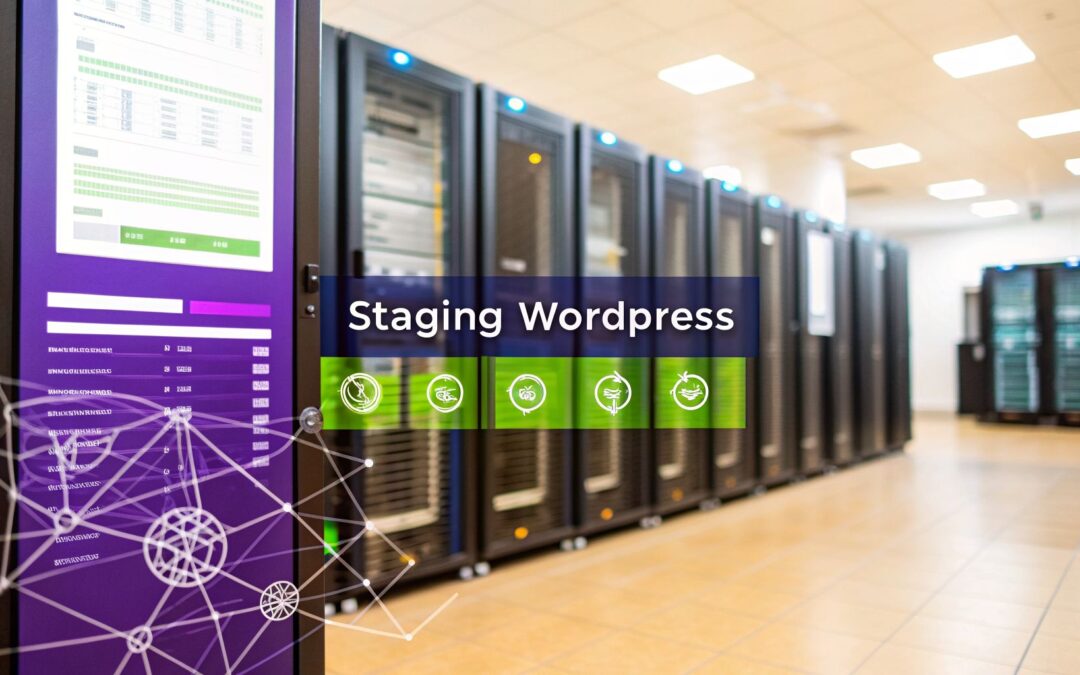
Ever found yourself holding your breath while clicking the "update" button on a live website? We've all been there. A staging site is your professional sandbox, a private clone of your live website where you can test changes without any of that risk.
It's hands-down the safest way to update themes, try out new plugins, or squash bugs before they ever see the light of day on your production site. For anyone using Divi and especially those running a WooCommerce store, it's not just a good idea—it's a strategic necessity to prevent costly downtime.
Why a Staging WordPress Site Is a Game Changer

Don't think of a staging site as just another technical chore. Think of it as a professional safety net for your business. It’s an identical, non-public copy of your site where you can experiment, break things, and innovate freely. This isolated environment lets you make bold changes, test complex features, and catch those sneaky errors before they ever impact your visitors or your revenue.
The stakes get even higher for Divi and WooCommerce sites. A minor plugin conflict can bring down your entire store in a flash. A broken Divi layout can instantly tarnish your brand’s credibility. Skipping the staging step is like walking a tightrope without a net—you might make it across a few times, but a fall is eventually inevitable and always costly.
Protect Revenue and Empower Innovation
A staging environment is a direct line of defense for your bottom line. Imagine you’re about to launch a new promotion using Divi Areas Pro, complete with slick popups and dynamic content. Testing this on a staging site first means you can be certain every trigger fires correctly and the user experience is flawless.
Now, picture deploying that straight to your live site, only to find a bug is preventing customers from actually completing their purchases. Those few hours you could have spent testing on staging can save you thousands in lost sales and spare you from a flood of angry customer support tickets. This sandbox truly empowers you to innovate with confidence.
A staging site transforms your development process from a high-stakes gamble into a controlled, professional workflow. It’s the difference between hoping an update works and knowing it will.
Staging has become a cornerstone of modern WordPress development, especially as the platform's market share has settled around 42.6-43.5% between 2022-2026. This maturity reflects a shift from just growing to adopting professional, sustainable practices. For Divi developers and store managers, staging is essential for mitigating risks, especially when rolling out API-driven features that can cause conflicts. You can explore more detailed WordPress statistics to see these trends for yourself.
To help you decide which path is right for you, here’s a quick rundown of the main approaches to creating a staging site.
Staging Methods at a Glance
| Method | Best For | Ease of Use | Cost |
|---|---|---|---|
| Hosting Provider | Beginners & most users | Easiest | Usually included with managed hosting plans |
| WordPress Plugin | Users on shared hosting or without built-in staging | Intermediate | Free to Premium |
| Manual Method | Developers & advanced users needing full control | Most Difficult | Free (requires technical skill) |
Each method has its place. Hosting-based staging is often the simplest, but plugins offer flexibility, and the manual route gives you ultimate control. We'll dive into how to execute each of these later in the guide.
Avoid Common Disasters
Without a staging site, every single update is a potential crisis waiting to happen. I’ve seen real-world scenarios where skipping this one step led to absolute chaos:
- Costly Downtime: A simple WooCommerce update conflicted with a third-party shipping plugin, taking an entire e-commerce store offline for hours during its busiest sales day.
- Damaged SEO: A theme update somehow unchecked the "discourage search engines" box on a development copy that was accidentally made live, creating duplicate content issues that tanked search rankings for weeks.
- Broken User Experience: A new Divi module broke the mobile navigation, making the site completely unusable for over 50% of its traffic until someone finally noticed and rolled it back.
Ultimately, using a staging site isn't just a developer's habit; it's a core business practice that protects your assets, your reputation, and your ability to grow.
Getting your hands on a staging WordPress site is the first, and most important, decision you'll make. Not all methods are created equal, and the best path for you really hinges on your technical comfort zone, your hosting setup, and just how complex your website is—especially if you're wrangling a Divi or WooCommerce site.
You've got three main routes: using your host’s built-in tools, firing up a dedicated plugin, or rolling up your sleeves and doing it all manually. Each option strikes a different balance between convenience, control, and cost. Let's break down the real-world pros and cons to help you find your perfect fit.
Host-Provided Staging Solutions
For most folks, this is the gold standard of convenience. Managed WordPress hosts like Kinsta, WP Engine, and SiteGround bake "one-click" staging right into their plans as a core feature. With a single button click, the host spins up an exact, isolated copy of your live site, handling all the files and database content for you.
The whole process is incredibly simple. Your hosting dashboard will have a dedicated staging section where you can create, jump into, and later deploy your test environment. Because the host handles the entire cloning process on their own optimized servers, it’s usually lightning-fast and super reliable, even for beefy websites.
Key Takeaway: If your hosting plan has a one-click staging feature, it's almost always the best way to go. It completely removes the technical guesswork and automates the tricky parts of cloning a site.
These tools are built to work perfectly within their own infrastructure, which drastically cuts down the risk of something going wrong. When you’re done testing, pushing your changes back to the live site is usually just as easy with a "Push to Live" button.
When to Choose Host-Based Staging
- You value speed and simplicity. Nothing out there beats the ease of a one-click solution.
- You run a big WooCommerce store. Hosts are far better equipped to copy large databases and thousands of files without timing out.
- You're not a developer. This is the most user-friendly path, requiring zero command-line or database wizardry.
If your current provider is leaving you in the lurch without this feature, it might be a strong signal that it's time for an upgrade. Feel free to check out our guide on the best WordPress hosting sites to see who offers the best tools for the job.
Flexible Plugin-Based Staging
So, what happens if your host doesn't offer a built-in staging tool? This is pretty common, especially on cheaper shared hosting plans. In that scenario, a staging plugin like WP Staging or Duplicator is your next best bet. These plugins work by creating a clone of your site inside a subfolder of your main WordPress installation.
The process is definitely more hands-on than host-based staging, but it's still very manageable for non-developers. You'll install the plugin, walk through its setup wizard, and let it do the heavy lifting of copying your files and database.
The huge advantage here is flexibility. You can set up a staging site on almost any hosting environment, giving you a safe space to test without needing to move your entire site to a new provider. Just be warned: these plugins can be resource hogs during the cloning process, which can sometimes lead to timeouts or performance hiccups on budget shared hosting.
The Manual Method for Full Control
Then there's the manual method—the classic, old-school approach. This is the path for developers who want total, granular control over every single step. It involves manually creating a new database, setting up a subdomain (like staging.yourdomain.com), copying all your site files via FTP or a file manager, and then cloning the database with a tool like phpMyAdmin.
This route is by far the most technically demanding and has the most potential for things to go sideways. You’re on the hook for everything, from updating the wp-config.php file to running a search-and-replace on the database to fix all the URLs. That last part is a critical step where a small mistake can wreak havoc on serialized data, a common issue for Divi sites.
Still, the manual method grants you ultimate power. You aren't relying on any third-party tool, and you can configure the environment exactly to your liking. It's a solid choice for complex development workflows or for working in highly restrictive hosting environments where the other methods just aren't an option.
The widespread use of staging sites is a clear sign of a maturing industry. Within the massive WordPress ecosystem, which now powers 42.6% of all websites, staging environments have become an essential tool for safe development. It's estimated they make up 10-15% of total WordPress hostnames, which could mean there are as many as 60-90 million staging environments out there. For Divi users at Divimode, this practice is non-negotiable when testing powerful tools like Divi Areas Pro, where flawless functionality is a must. You can dive deeper into these WordPress trends and figures on WPZOOM.
How to Create Your Staging WordPress Site
Alright, it’s time to roll up our sleeves and build your staging WordPress site. We'll walk through the three main methods you can use: relying on your host's tools, using a dedicated plugin, or going the manual route.
Each path has its own twists and turns, but the destination is always the same—a safe, private clone of your live website where you can test without fear.

This workflow gives you a clear sense of the options, from the simplest one-click hosting solution to the more technical manual approach. It's all about finding the right fit for your skills and needs.
Using Your Host’s One-Click Staging
If your managed WordPress host offers one-click staging, this is by far your simplest and most reliable option. I always recommend this route first. While the dashboard might look a bit different from one provider to the next, the core process is remarkably consistent.
First, you'll log in to your hosting account and find the management area for your website. Look for a section labeled "Staging," "Staging Sites," or "Dev Environments."
From there, you should see a pretty obvious button like "Create Staging Site" or "Add Staging." Clicking this kicks off an automated process where your host clones your entire site—all the files and the complete database—into a sandboxed environment. This can take a few minutes for larger sites, but it's completely hands-off.
Once it's done, your host will give you a unique staging URL (usually something like staging-xyz.yourdomain.com) and login details, which are often the same as your live site's. And that's it! You now have a perfect copy of your site ready for testing.
Creating a Staging Site with a Plugin
When your host doesn't offer a built-in tool, a staging plugin is your next best bet. I've had good results with WP Staging, which is a popular choice that works on most hosting environments. The process is still straightforward but does require a bit more attention to detail.
Here's the typical flow:
- Install and Activate the Plugin: Head to your WordPress dashboard, go to Plugins > Add New, and search for "WP Staging." Install and activate it just like any other plugin.
- Start the Cloning Process: You'll find a new "WP Staging" menu item. Navigate there and click the "Create New Staging Site" button. You’ll be asked to name your staging site, which will determine its subfolder (for example,
yourdomain.com/staging). - Configure the Cloning Options: This is the most important part. The plugin lets you choose which database tables and files to clone. For your first staging site, it's always best to clone everything to make sure you have a complete replica.
The plugin will then scan your site and copy the data. Be aware that this can be resource-intensive on shared hosting, so I’d suggest running it during a low-traffic period. Once complete, you’ll get a link to access your new staging environment.
The Manual Staging Method for Experts
The manual approach gives you total control, but it's also the most complex and carries the highest risk of error. This path is really only for those who are comfortable working directly with server files and databases. If you're not familiar with FTP and phpMyAdmin, I'd stick with one of the other methods.
The process breaks down into these core tasks:
- Create a Subdomain: In your hosting control panel (like cPanel), set up a subdomain such as
staging.yourdomain.com. This is where your staging site's files will live. - Copy Your Site Files: Using an FTP client like FileZilla or your host’s File Manager, download all your live site’s files from the
public_htmldirectory. Then, upload them to the new subdomain's directory. - Clone the Database: This is the most delicate step. In phpMyAdmin, export your live site’s entire database as a
.sqlfile. Then, create a new, empty database for your staging site and import that.sqlfile into it. - Update the
wp-config.phpFile: Finally, you need to edit thewp-config.phpfile in your staging site's directory. Update the database name, username, and password to point to the new staging database you just created.
Expert Tip: After creating a manual staging site, your work isn't done. All the internal links and asset paths in the database still point to your live domain. You have to fix this for the staging site to function correctly.
The Critical Step of Handling Serialized Data
This brings us to a crucial point, especially for Divi and WooCommerce users. You can't just run a simple find-and-replace on your database to update yourdomain.com to staging.yourdomain.com. WordPress, Divi, and many plugins use serialized data to store settings, layouts, and other complex information.
Serialized data is a special format for storing arrays and objects as a text string. Critically, this string includes character counts. A simple search-and-replace that changes the length of a URL will break these character counts, corrupting the data and leading to broken layouts and missing settings. I've seen this happen many times, and it's a mess to fix.
This is why you need a tool that understands serialized data. The Better Search Replace plugin is a fantastic, free solution for this task. It's one of the first plugins I install on a new staging site.
As you can see, the interface is dead simple. After installing it on your new staging site, go to Tools > Better Search Replace.
Enter your live URL in the "Search for" field and your staging URL in the "Replace with" field. Select all your database tables, and—this is a must—run it as a dry run first. This will show you exactly how many changes will be made without actually touching anything.
Once you confirm the dry run looks correct, uncheck that box and run the replacement for real. This correctly updates all your URLs while keeping your serialized data intact, ensuring your Divi layouts and plugin settings work perfectly on your staging site.
Your Essential Staging Site Testing Checklist

Getting a copy of your site up and running is just step one. A staging site is only as good as the tests you run on it, and before you even think about tinkering with code or updating plugins, you need to lock the whole thing down.
Think of it as your pre-flight check. You wouldn’t take off without checking the fuel gauge, and pushing changes live without proper testing is just as risky. This is what separates a professional workflow from amateur guesswork, and it can save you from a preventable disaster.
Secure Your Staging Environment First
The very first thing you should do on a new staging site is play defense. You need to make it completely invisible to the public and, more importantly, to search engines. If Google stumbles upon and indexes your staging site, you’ll create some serious duplicate content problems that can tank your live site’s SEO.
Here’s what to do immediately:
- Password Protect Your Site: Most one-click hosting solutions handle this for you, but it’s always smart to double-check. If it’s not protected, use your host's
.htaccesseditor or a simple plugin to lock the entire staging site behind a username and password. This keeps it hidden from prying eyes. - Block Search Engines: In your staging site's WordPress dashboard, head over to Settings > Reading. Make absolutely sure the box for "Discourage search engines from indexing this site" is checked. This adds a
noindextag to your site's header—a clear signal for Google and other crawlers to stay away.
These two small steps are your first line of defense against SEO mishaps and unwanted visitors. Only after you've secured your sandbox should you move on to the real work.
Your Divi-Specific Testing Protocol
For those of us building with Divi, generic checklists just don't cut it. If you’re using advanced features from plugins like Divi Areas Pro, your testing needs to get way more specific to cover all the dynamic, interactive elements that make your site special.
Go through your staging site with a fine-tooth comb and test every interactive Divi feature you rely on.
- Mega Menus and Headers: Check that your Divi Theme Builder headers, especially any custom mega menus, display and function perfectly on desktops, tablets, and mobile.
- Popups and Fly-Ins: Trigger every single popup. Test the triggers themselves—exit-intent, scroll depth, time delays—to be certain they fire exactly as configured.
- Conditional Content: If you're showing or hiding content based on user roles or devices, test each scenario. Log in as a test user with a different role to confirm your logic holds up.
- Forms and CTAs: Fill out and submit every Divi contact form. Click every single call-to-action button to make sure it goes to the right place.
A broken popup trigger or a janky mega menu can absolutely cripple the user experience. Thoroughly testing these Divi-specific features on your staging WordPress site is what prevents a beautiful design from becoming a functional failure on your live site.
The WooCommerce Checkout Gauntlet
When you're running an e-commerce store, nothing is more critical than the checkout process. A single bug here translates directly into lost revenue. Your WooCommerce testing has to be exhaustive, simulating a customer's entire journey from browsing to buying. A good software deployment checklist can also be a huge help for making sure you've covered all your bases before going live.
First, set up a sandbox payment gateway. The official WooCommerce Payments has a great test mode, as does the Stripe for WooCommerce gateway. This lets you run real transactions without moving actual money.
- Full Purchase Flow: Add different product types to the cart—simple, variable, virtual, you name it. Go through the entire checkout process and "pay" using your sandbox gateway.
- Product Variations: Make sure product variations like size and color work flawlessly. The price and image should update correctly when a different option is selected.
- Order Emails: Confirm that the staging site is generating all the necessary order confirmation emails for both the customer and the store admin. Most hosts or staging plugins will intercept these emails, but you can use a plugin like WP Mail Logging to verify they were created.
- User Accounts: Don't forget the "My Account" page. Test that customers can view their orders, manage their addresses, and perform other account-related actions.
Running this gauntlet ensures your money-making machine is well-oiled and ready for customers. And if you're looking to build an even more powerful store, explore our complete guide on optimizing WooCommerce for Divi.
Deploying Changes from Staging to Live Safely
You’ve built and tested your changes, and now it’s time for the final, nerve-wracking step: moving everything from staging to the live site. This process, often called “pushing to live,” can feel like a high-stakes moment, but with the right approach, it’s a smooth and controlled transition.How you handle this depends entirely on how you set up your staging WordPress site in the first place.
If you’re on a managed host that offers one-click staging, you're in luck. Your hosting dashboard will likely have a "Push to Live" or "Deploy to Production" button. Clicking this usually presents you with options to move just the files, just the database, or both—giving you incredible control over the process.
Behind the scenes, your host is doing all the heavy lifting. It’s automating a complex sequence of backing up your live site and then carefully swapping in the files and database tables from your staging environment. This is, by far, the safest and most reliable way to deploy changes.
Don't Skip The Backup!
No matter which method you use, this rule is non-negotiable: always back up your live site immediately before you push anything. This is your ultimate safety net.
Things can go wrong. A file might not copy over correctly, or a database sync could go sideways. A recent, complete backup means you can restore your live site in minutes, turning a potential disaster into a minor hiccup. Most managed hosts do this automatically, but I always recommend taking a manual backup yourself for that extra peace of mind.
When planning a major site overhaul, a staging environment is your best friend. To make sure nothing gets missed during the transition, it helps to follow an ultimate website redesign checklist to map out every step.
Smart Syncing for WooCommerce Stores
Pushing changes gets a lot more delicate when you're running a live WooCommerce store. If you've gotten new orders or signups on your live site while you were working on staging, doing a full database push will overwrite and permanently erase that new data.
This is where a "smart sync" strategy is absolutely essential. You simply cannot replace the live database with the one from staging.
Never overwrite a live WooCommerce database with a full staging database. Instead, you must selectively sync only the specific changes you made, leaving crucial order and customer data untouched.
So, how do you manage this delicate operation? It all comes down to the kind of changes you made.
- File-Only Changes: If you only tweaked theme files, updated plugins, or adjusted some CSS, you can safely push only the files to your live site. The live database remains untouched, and no orders are lost. This is the simplest scenario.
- Content or Settings Changes: Did you adjust theme options, modify Divi layouts, or change plugin settings? You'll need to move specific database tables. A tool like WP Migrate is perfect for this, as it lets you selectively push tables like
wp_optionsorwp_postmetawhile avoiding WooCommerce tables likewp_woocommerce_orders. - New Posts or Pages: For simple content additions like a new blog post, the safest and fastest route is often to just recreate it on the live site. Copy and paste. This completely sidesteps any risk to your store’s data.
For major redesigns, you might need to plan a very brief maintenance window. You can temporarily pause new orders on your live site right before you do the final sync.
Once you’re ready to go live, run through a detailed Divi website launch checklist to ensure you've covered all your bases. It’s a great way to catch any small details you might have missed.
By understanding the difference between a full push and a selective sync, you can confidently update your Divi and WooCommerce site. You get to deploy all your hard work while making sure every single customer order stays safe and sound.
Common Questions About WordPress Staging
Once you start using a staging WordPress site, the real-world questions start to surface. It's one thing to read about the theory, but it's another thing entirely when you're trying to push changes to a live WooCommerce store or manage complex Divi features.
Let's dig into some of the most common hurdles you'll encounter and how to clear them like a pro.
How Do I Handle New WooCommerce Orders?
This is probably the single most important question for anyone running an e-commerce site. Here’s the number one rule you absolutely cannot break: never do a full database push from staging to live if your store has taken new orders in the meantime. If you do, you'll wipe out those orders and any new customer accounts permanently.
The trick is to think about your changes in two separate buckets: files and database.
- File Changes: If all you did was update a theme, a plugin, or tweak some CSS, you're in the clear. You can safely push just the files to your live site without touching the database.
- Database Changes: This is where it gets tricky. If you've adjusted settings in Divi or another plugin, a selective push is your best friend. A tool like WP Migrate lets you push only specific database tables (like
wp_options) while leaving your crucial WooCommerce tables (_posts,_postmeta,_woocommerce_order_items, etc.) untouched. - New Content: Honestly, for new pages or blog posts, it’s often safer and quicker to just rebuild them on the live site. It might feel like double work, but it completely removes the risk of data conflicts.
This workflow lets you deploy your hard work without putting your store's sales data at risk.
Treat your live WooCommerce database like a fortress. Always choose selective syncing or manual content recreation over a risky full database overwrite. It's the only way to guarantee you won't lose mission-critical data.
Will a Staging Site Affect My SEO or Speed?
Nope, not one bit—as long as you set it up correctly. A staging site is a totally separate copy of your website, so it doesn't leech resources or slow down your live site. They run in their own sandboxes.
The most critical part is making sure search engines don't find and index your staging environment. Most one-click staging tools from hosts handle this for you automatically, but it never hurts to double-check. Just pop into your staging site's dashboard, head over to Settings > Reading, and make sure the box for "Discourage search engines from indexing this site" is checked.
That one little checkbox is all it takes to prevent duplicate content headaches and protect your SEO rankings.
What Happens to My Divi Areas Pro Settings?
All those awesome popups, mega menus, and clever display rules you’ve built with Divi Areas Pro are stored right in the database. When you push your staging site live, those settings are supposed to come along for the ride.
This is exactly why handling serialized data correctly is so non-negotiable. If your deployment tool uses a basic find-and-replace to update URLs, it will almost certainly break this data. The result? Your popups won't fire, and your mega menus might vanish into thin air.
Always, always use a serialization-aware tool for your migrations. And the moment your push is complete, go to the live site and test every single one of those features to make sure they're working as expected.
Here at Divimode, we design our tools for a professional workflow just like this. Our premium plugin, Divi Areas Pro, empowers you to create advanced popups, fly-ins, and conditional content that you can build and test with confidence on a staging site before launching them to your live audience.
More Articles You Will Like