 Alex Martin
You publish a new landing page in Divi. The layout is polished, the copy is solid, and the call to action is exactly where it should be. A few days later, you search for it and nothing shows up.
That usually isn't a design problem. It's a discovery problem.
On WordPress sites, especially ones built with Divi, WooCommerce, and several custom templates, search engines don't always find your important URLs as cleanly as you expect. A good sitemap closes that gap. It gives crawlers a structured list of the pages, posts, products, and content types you want indexed.
Why Your Divi Site Needs a Sitemap
Divi sites often grow in layers. You start with a homepage and a few service pages, then add blog posts, landing pages, popups, project items, product categories, product pages, filtered archives, and utility pages. From the front end, everything can feel connected. To a crawler, that structure can still be uneven.
That's why a sitemap matters. It acts as a reliable directory of indexable content, separate from your menu, your footer, and your internal links. If you've ever launched a new Divi page and wondered why it isn't appearing in search, this is usually one of the first places to check.
What a sitemap does in practice
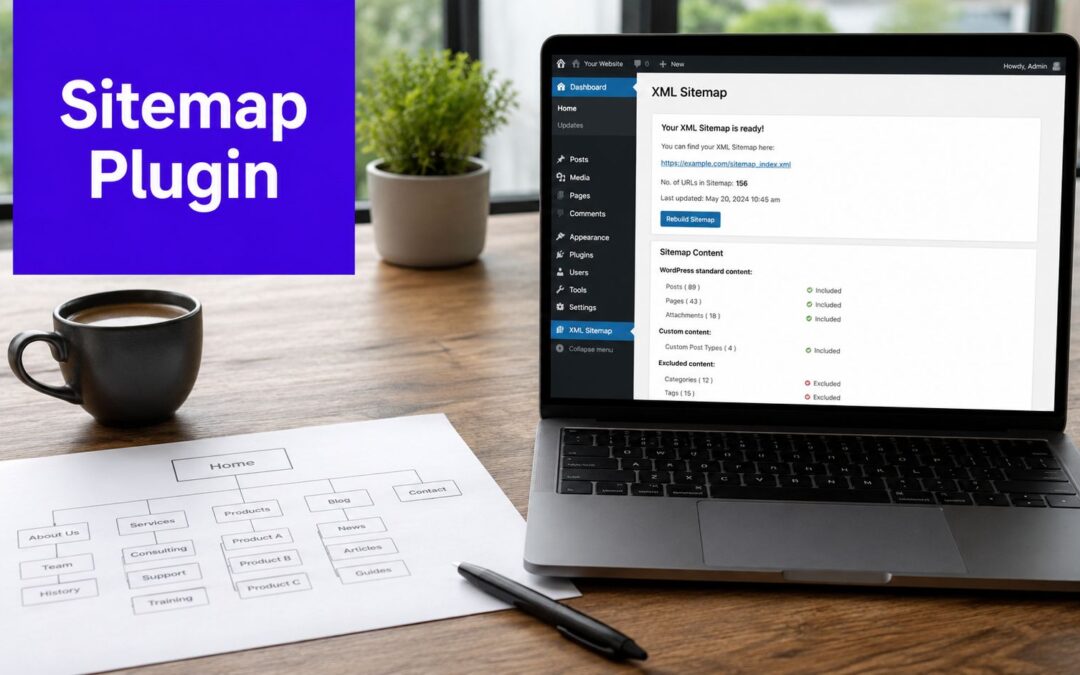
A sitemap helps search engines find the URLs you want crawled. On WordPress, the most useful setup is usually an XML sitemap that updates automatically when content changes.
For Divi users, that matters because site structure is often more customized than a basic blog. You may have:
- Landing pages built with the Divi Builder that aren't linked heavily from the main navigation
- WooCommerce product pages sitting deep inside category structures
- Project or portfolio content that needs deliberate inclusion
- Utility pages like cart, checkout, account, and thank-you pages that usually shouldn't be emphasized
A proper sitemap doesn't fix bad SEO on its own. It does make sure your best content isn't hidden behind a beautiful layout and weak crawl paths.
Practical rule: If a page should rank, it should be internally linked and present in your XML sitemap.
Why Divi users get tripped up
The common mistake is assuming WordPress, Divi, and an SEO plugin are all handling the same thing. They aren't always aligned. I've seen Divi sites where the page exists, the page is published, and the page even has internal links, but the sitemap output is missing important content types or includes pages that should stay out of search.
That creates noise. Search engines spend time on URLs you don't care about, while your money pages wait.
If you're working on visibility, start with crawlability before you chase advanced tactics. This pairs well with a broader guide to ranking your Divi website, but the first job is making sure Google can consistently find what you've built.
Understanding Sitemap Types XML vs HTML
Most confusion around a site map plugin for WordPress starts here. People install an HTML sitemap plugin, see a page full of links, and assume search engines now have what they need. Sometimes they don't.

The simple difference
An XML sitemap is for search engines. It is structured, machine-readable, and usually lives at a URL like /sitemap.xml.
An HTML sitemap is for people. It is a normal web page that lists links to major sections or pages so visitors can browse your site more easily.
A useful way to consider it:
- XML is the blueprint for crawlers
- HTML is the directory for visitors
In the WordPress plugin directory, about 60% of basic HTML sitemap plugins, like WP Sitemap Page, are designed for human navigation and create a single-page list via a shortcode, whereas XML sitemap plugins are built for search engine bots according to this overview of WordPress sitemap plugin types.
XML Sitemap vs. HTML Sitemap at a Glance
| Feature | XML Sitemap | HTML Sitemap |
|---|---|---|
| Primary audience | Search engines | Human visitors |
| Format | Structured XML file | Standard web page |
| Main goal | Help crawlers discover URLs | Help users navigate content |
| Typical location | /sitemap.xml |
/sitemap or a normal page slug |
| Best use | Indexing important content | Accessibility and navigation |
When Divi sites need both
For most Divi projects, the XML sitemap is essential. If your services, case studies, blog posts, or products need search visibility, you need that machine-readable file.
An HTML sitemap is optional, but it can still help on larger sites. It works well when you have:
- Large content libraries with many posts or resources
- WooCommerce catalogs with layered navigation that visitors may bypass
- Service sites with many landing pages spread across parent and child page structures
If you want a plain-language primer on setup details, Raven SEO has a decent walkthrough on how to create XML sitemaps. The key point is choosing the right type for the job.
An HTML sitemap can improve navigation. It does not replace an XML sitemap for SEO.
What doesn't work
What fails most often is partial setup. A Divi user installs a shortcode-based sitemap plugin, publishes a sitemap page, and assumes indexing is covered. That gives visitors a directory. It does not guarantee bots get a proper XML feed of your URLs.
That's the distinction to keep in mind for the rest of the setup.
How to Choose a Sitemap Plugin
The best site map plugin for WordPress isn't always the one with the longest feature list. On Divi builds, I care more about stability, content coverage, and whether the plugin stays out of the way.

Start with compatibility, not popularity
A sitemap plugin has one job. It should generate accurate output, update when content changes, and include the content types you use.
That matters more on Divi and WooCommerce sites because the content model is rarely just posts and pages. You may need coverage for portfolios, products, product categories, images, or other public post types. If the plugin misses those, your sitemap looks complete when it isn't.
A good example of a long-standing tool is the Google XML Sitemap Generator plugin, which has over 2.5 million active downloads since its 2009 release and automatically creates and updates sitemaps for pages, images, and custom post types, while pinging search engines when content changes, as listed on its WordPress.org plugin page.
What I look for on Divi builds
When evaluating a plugin, I check these points first:
- Automatic updates: New pages and product edits should refresh the sitemap without manual regeneration.
- Custom post type support: If your site uses project-style content or other public types, they should be easy to include or exclude.
- WooCommerce awareness: Products, product categories, and related shop content should be handled cleanly.
- Simple exclusions: You should be able to leave out thank-you pages, cart-related pages, and other low-value URLs.
- Predictable output: The sitemap URL should load consistently and not depend on fragile theme code.
Trade-offs that matter
All-in-one SEO plugins can handle sitemaps well, but they also add broader features you may not need. A dedicated sitemap plugin can be cleaner if you want one task done properly. The trade-off is plugin overlap. If you already use an SEO plugin that generates solid XML sitemaps, adding another sitemap plugin can create duplicate outputs or confusion about which URL to submit.
For Divi users, I usually recommend this decision path:
- Check whether your current SEO stack already generates a clean XML sitemap
- Verify that it includes the right content types
- Only add a dedicated sitemap plugin if the current output is incomplete or awkward to control
A plugin isn't good because it has more settings. It's good when the sitemap stays accurate after months of content edits, redesigns, and WooCommerce changes.
What usually goes wrong
The bad choices tend to share the same pattern. They either create only a human-readable sitemap, bury useful controls behind unrelated SEO features, or generate output that looks fine until you inspect the URLs closely.
On a Divi site, reliability beats novelty. If the plugin doesn't respect the structure of the site you built, it becomes another layer to debug later.
Configuring Your Sitemap for Divi and WooCommerce
The bulk of the critical work unfolds in this stage. Installing a plugin is easy. Configuring it so your Divi pages, WooCommerce products, and custom content are represented correctly is what gets results.
Check the sitemap URL first
After activating your chosen plugin, open the sitemap URL in your browser. In many setups, that's /sitemap.xml.
Don't skip this. If the file doesn't load cleanly, there's no point tweaking settings deeper in the dashboard.
Then review the major content buckets. On a typical Divi and WooCommerce build, I want to confirm that these are either present or intentionally excluded:
- Pages for service pages, homepage variants, and landing pages
- Posts for articles and content marketing
- Products for WooCommerce listings
- Relevant taxonomies such as product categories, if those archives are meant to rank
- Custom post types such as portfolio or project entries, if they're public and useful in search
Handle Divi-specific content with intent
Divi users often assume every Builder-created page is enough on its own. It isn't. The sitemap plugin still needs to recognize the post type behind that page.
A reliable workflow is:
- Review public post types in the plugin settings
- Include the content types that represent real search targets
- Exclude design utility content and thin pages
- Save changes and recheck the XML output
For example, if a site uses a Divi portfolio-style section tied to a Projects content type, decide whether those project entries deserve indexing. If they do, keep them in the sitemap. If they're only visual fillers or duplicate content blocks, leave them out.
Clean up WooCommerce noise
WooCommerce adds a lot of URLs. Not all of them belong in your sitemap.
Keep the pages that support search visibility. Exclude the ones that exist only for transactions or temporary user flow. In practice, that usually means being careful with pages such as checkout, cart, account screens, and thank-you pages.
Product variations need judgment too. On many stores, the parent product page is the page that should rank. If variations don't create distinct, useful landing pages, don't force them into the index just because they exist in the catalog.
Here are the WooCommerce checks I use most often:
- Keep core product pages visible: Include products that are meant to appear in search results.
- Review category archives: Include product categories when they have real merchandising value and useful copy.
- Skip utility endpoints: Cart, checkout, and account-related URLs usually don't belong in an SEO-focused sitemap.
- Watch duplicate paths: Filtered archives and parameter-heavy URLs can create clutter if another plugin exposes them.
For permalink stability, it also helps to make sure your URLs are set up cleanly before you finalize the sitemap. This guide to configuring WordPress permalink settings is worth reviewing if your shop structure is messy.
Large stores need pagination support
Big WooCommerce catalogs create a separate technical issue. For large WooCommerce sites, top-tier plugins that support pagination, slicing sitemaps into 50,000 URL chunks, are essential to avoid memory limit crashes, which occur in about 27% of unoptimized setups.
That matters on stores with large product inventories, imported catalogs, or many image-heavy entries. If your plugin can't split the sitemap into manageable files, generation can fail or time out during updates.
On WooCommerce sites, a sitemap that only works when nothing changes isn't a working sitemap.
Exclusions that usually make sense
Every site differs, but these are the first pages I review for exclusion:
- Thank-you pages created after form submissions or purchases
- Low-value legal pages that don't need search traffic
- Duplicate landing pages made for ad testing only
- Temporary campaign pages that are no longer active
After exclusions, regenerate if your plugin requires it, then inspect the sitemap output again. The goal isn't maximum URL count. The goal is a clean list of the URLs that deserve crawling.
Submitting Your Sitemap to Search Engines
Once the sitemap exists and you've checked the contents, submit it. Otherwise you're waiting for crawlers to discover it on their own schedule.

Submit it to Google Search Console
In Google Search Console, open the property for your site and go to the Sitemaps section. Enter the sitemap path, usually sitemap.xml, and submit it.
After that, check the status rather than assuming it's fine. If Google can fetch the file and process it, you'll start seeing whether the submitted URLs align with indexing over time.
For Divi users who haven't done the full search console setup yet, this walkthrough on how to submit your website to Google is a practical starting point.
Submit it to Bing Webmaster Tools
Bing's process is similar. Add the site, verify ownership, open the sitemap area, and submit the same sitemap URL.
Even if Google is your main focus, Bing is easy to cover once the XML file is already in place. There's no reason to leave that visibility on the table.
What to verify after submission
Don't stop at the submit button. Check these points:
- The sitemap fetch succeeds: If the platform can't retrieve it, the problem is usually URL-related, permissions-related, or cache-related.
- The file updates after edits: Publish or update a page, then confirm the sitemap reflects the change.
- The listed URLs are the right ones: If low-value pages dominate the sitemap, fix the configuration before waiting on indexing.
A quick visual walkthrough can also help if you're handling this for clients or junior team members:
Don't overcomplicate the path
Many WordPress users submit multiple sitemap URLs because different plugins or features generated different versions. That's where confusion starts.
Pick the primary sitemap generated by the plugin or SEO stack you've decided to trust. Use that one consistently. If you replace plugins later, remove the old sitemap submission and keep only the current source of truth.
Troubleshooting Common Sitemap Errors
Most sitemap problems on Divi sites aren't dramatic. They're annoying, subtle, and easy to miss until Search Console starts reporting issues.

The sitemap URL loads, but it's outdated
This usually happens when caching gets in the way. A cache plugin or server cache serves an older version of the sitemap, so new pages don't appear quickly.
Fix it by excluding the sitemap endpoint from caching and then checking the file again after publishing a fresh page. On Divi sites using performance plugins, this is one of the first things I verify.
Important pages are missing
When a page or product doesn't appear, the cause is often one of these:
- The post type is excluded in the sitemap plugin settings
- The content is set to noindex in your SEO configuration
- The page status isn't public
- A WooCommerce or custom content type isn't enabled in the sitemap output
Check the plugin settings before assuming the sitemap is broken. On Divi builds, missing portfolio or custom content usually comes back to post type visibility.
Search Console reports soft 404 issues
This one catches a lot of site owners because the sitemap itself may exist. The problem is discovery and handling.
A verified implementation note warns that a common pitfall is the "soft 404" error, where plugins generate a sitemap but fail to update the robots.txt file, causing 18% of submitted URLs to be ignored. Manually adding Sitemap: https://yoursite.com/sitemap.xml to robots.txt is a key mitigation step.
If the sitemap exists but search engines aren't treating it consistently, check robots.txt before you blame the plugin.
Large WooCommerce sitemap generation fails
On bigger stores, the plugin may struggle during generation. Symptoms include timeouts, partial sitemap files, or a sitemap index that doesn't populate fully.
What usually helps:
- Use a plugin that splits sitemap files into smaller chunks
- Reduce unnecessary included archives so the sitemap stays focused
- Check hosting limits and plugin conflicts if generation stalls repeatedly
Two sitemap systems are active
This is common after redesigns or plugin changes. One SEO plugin generates a sitemap, then a dedicated sitemap plugin does the same thing. Both remain active. Search engines get mixed signals, and site owners don't know which file is current.
Pick one sitemap generator. Disable the other. Recheck the submitted URL in your webmaster tools so the active file matches what you're maintaining.
If you're building serious sites with Divi, the best workflow isn't just better design. It's better site structure, cleaner user journeys, and fewer technical blind spots. Divimode helps Divi users do exactly that with advanced plugins, practical tutorials, and hands-on guidance for creating faster, more interactive WordPress sites.
More Articles You Will Like